fast50
 
Call 0508 732266 or email us
* Required


Blog

Blog

The History of the Shipping Container

Monday, June 13, 2016

 “Think outside of the box,” is one of the most commonly used phrases in the business world. Malcolm Mclean did just that. Many of us are in the dark as to who he is. Who is Malcolm Mclean and why should we know more about him?


Let’s delve into the history of shipping containers, and its enormous impact on global trade.

How did they cart goods around the globe? Evidently they shipped tons of cargo, jewels, merchandise and products from Africa, Greece, Egypt and Canaan for thousands of years.  Recorded history indicates that sea transport is the largest carrier of goods throughout the years. It was a challenging process. Goods would routinely be loaded into sacks, barrels, and wooden crates and became time-consuming and burdensome. This process described is known as break bulk cargo and was the only form of transporting cargo via ship.

They had a simple system in place to make the process more productive. However, with the breakthrough of technologies and transition of manufacturing processes resulted in an upsurge of the railways,  it drew attention to the deficiencies of the cargo shipping system. Shifting cargo from ships to trains prolonged the process and caused considerable delays and obstructing movement within many ports.

The term logistics, “the commercial activity of transporting goods to customers,” is the word we are familiar with today.  During the 1950s  the brainchild of containerisation, Malcolm Mclean had an innovative idea that impacted the world.

Malcolm Mclean, who was a trucking entrepreneur, became frustrated with the pitfalls of loading, unloading, and transporting goods. He recognised that there must be a more efficient way to carry cargo,  and concluded that boats would be more cost-efficient as opposed to road transport, at the same time reducing maintenance of trucks and the cost of fuel.

A discerning Malcolm understood the need to design a more efficient system of loading and unloading cargo which consisted of various sized crates and boxes, he decided to revolutionise his transport by expanding to pursue the concept of developing a more desirable containerisation system.

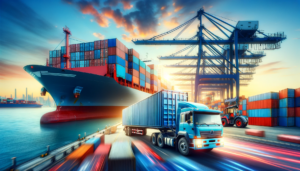
In 1955 he established the Pan Atlantic Tanker Company and renamed it Sea-Land Shipping.  After a lot of testing, he recognised that it would be easier to use one container that could be hauled by truck directly onto the boat without unloading its freight. Hence, reducing the chance of damage and simplifying the logistical nightmare.

Malcolm Mclean’s ingenuity brought about the shipping container as we know it today. It was durable and had standardised dimensions. Which made it easier to load, and was stackable. They were also lockable, making them theft resistant.

Even though Malcolm Mclean’s inventiveness was not entirely new, he is at the forefront of revolutionising transport and standardising the process of shipping containerised cargo and reducing the cost overall.

Malcolm Mclean ultimately, designed a ship that carried 58 of his containers. That first ‘conatiner’ ship sailed from the Port of Newark to the Port of Houston on the 26th of April 1956.

At SEA Containers NZ we don’t only sell and hire these metal boxes, but are able to deliver them nationwide. For any further advice, please feel free to contact our friendly team or why not fill out a quick online quote form.


Trackback Link
http://www.seacontainers.co.nz/BlogRetrieve.aspx?BlogID=13549&PostID=669673&A=Trackback
Trackbacks
Post has no trackbacks.

Recent Posts


Tags


Archive

Get a quick quote

Contact Name


Yes
No